
Students learning artificial intelligence need hands-on projects that go beyond theory. Building real applications with actual code, APIs, and deployment workflows teaches the skills that matter in 2026. This guide covers practical artificial intelligence projects for students who want to ship working software, not just complete assignments. Every project includes implementation details, tool recommendations, and integration patterns used in production environments.
Start with Computer Vision Fundamentals
Computer vision remains one of the most accessible entry points for artificial intelligence projects for students. The combination of visual feedback and tangible results makes debugging easier and learning more intuitive.
Image Classification with Pre-Trained Models
Build an image classifier using transfer learning with models like ResNet or EfficientNet. Download a pre-trained model from TensorFlow Hub or Hugging Face, then fine-tune it on a custom dataset.
Key implementation steps:
- Load a base model (ResNet50, MobileNet, or ViT)
- Freeze the initial layers to preserve learned features
- Add custom classification heads for your specific categories
- Train on 500-1000 images per class minimum
- Deploy with a simple Flask or FastAPI backend
The beauty of transfer learning is that you need minimal compute resources. A laptop with 8GB RAM can fine-tune models in hours instead of days. Students can focus on data preparation, API integration, and deployment rather than waiting for training cycles.
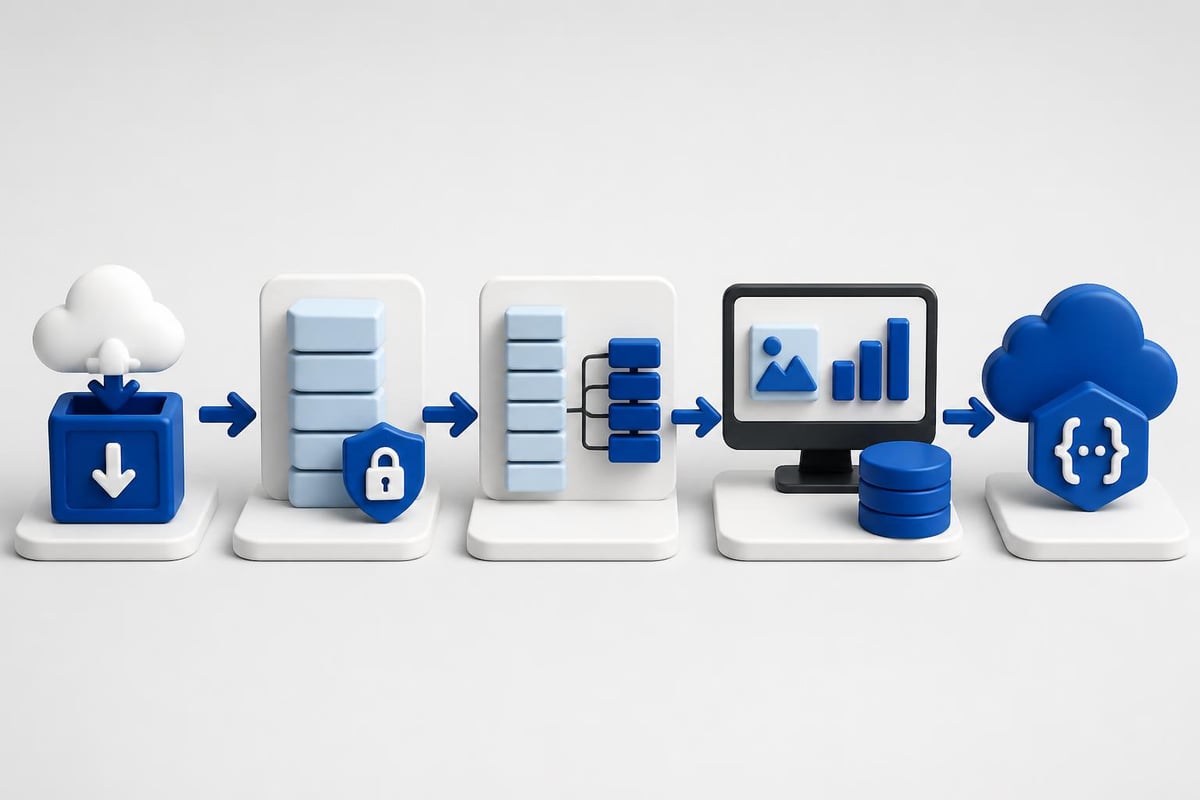
Research shows that integrating computer vision into introductory courses significantly improves AI competency among students. The visual nature of the feedback loop accelerates understanding of model behavior and performance metrics.
Object Detection for Real-World Applications
Move beyond classification to object detection using YOLO or Faster R-CNN. These models identify multiple objects and their locations within images, opening up practical use cases.
| Model | Speed | Accuracy | Best For |
|---|---|---|---|
| YOLOv8 | Fast | Good | Real-time detection |
| Faster R-CNN | Moderate | Excellent | High accuracy needs |
| EfficientDet | Balanced | Very Good | Mobile deployment |
Build a system that detects objects in webcam feeds, processes uploaded images, or analyzes video streams. Connect the detection pipeline to a database that logs findings with timestamps and confidence scores.
Natural Language Processing Projects
NLP projects teach students how to work with APIs, process unstructured data, and build interfaces that users actually want. Modern transformer models make sophisticated language understanding accessible through simple API calls.
Sentiment Analysis API
Create a REST API that analyzes sentiment in text inputs. Use Hugging Face transformers or OpenAI's API for the core analysis, then build your own wrapper with caching, rate limiting, and response formatting.
Implementation checklist:
- Set up FastAPI or Express.js backend
- Integrate sentiment analysis model or API
- Add Redis caching for repeated queries
- Implement rate limiting per API key
- Create request validation and error handling
- Write OpenAPI documentation
This project teaches API design patterns that transfer directly to production environments. Students learn about authentication, async processing, and how to handle third-party API failures gracefully.
Text Summarization Tool
Build a summarization service that condenses long articles, research papers, or documentation. Combine extractive and abstractive techniques to generate useful summaries.
Use the T5 model from Hugging Face or integrate Claude/GPT APIs for more sophisticated results. Add features like summary length control, keyword extraction, and multi-document summarization.
Connect your summarization engine to a simple frontend where users paste text or provide URLs. Parse the content, clean the HTML, extract the main text, and return structured summaries with key points highlighted.
Students working on chatbot projects can explore conversational AI fundamentals to understand how dialog systems process and generate responses.
Machine Learning Pipelines
Building complete ML pipelines teaches the full lifecycle of AI projects, from data ingestion to model serving. These artificial intelligence projects for students emphasize production-ready patterns over notebook prototypes.
Recommendation System
Create a recommendation engine that suggests items based on user behavior. Start with collaborative filtering using matrix factorization, then experiment with neural approaches.
Core components:
- User-item interaction matrix builder
- Similarity calculation engine (cosine, Euclidean)
- Model training pipeline with evaluation metrics
- API endpoint for real-time recommendations
- A/B testing framework for comparing algorithms
| Algorithm | Complexity | Data Needs | Accuracy |
|---|---|---|---|
| Item-based CF | Low | Moderate | Good |
| SVD | Medium | High | Very Good |
| Neural CF | High | Very High | Excellent |
Store user interactions in PostgreSQL or MongoDB. Build background jobs that retrain models daily. Serve recommendations through cached endpoints that respond in under 100ms.
Predictive Maintenance System
Develop a system that predicts equipment failures using sensor data. This project combines time series analysis, classification, and real-time data processing.
Simulate or use real IoT sensor data showing temperature, vibration, pressure, and other metrics. Train models to detect anomalies and predict failures before they occur.
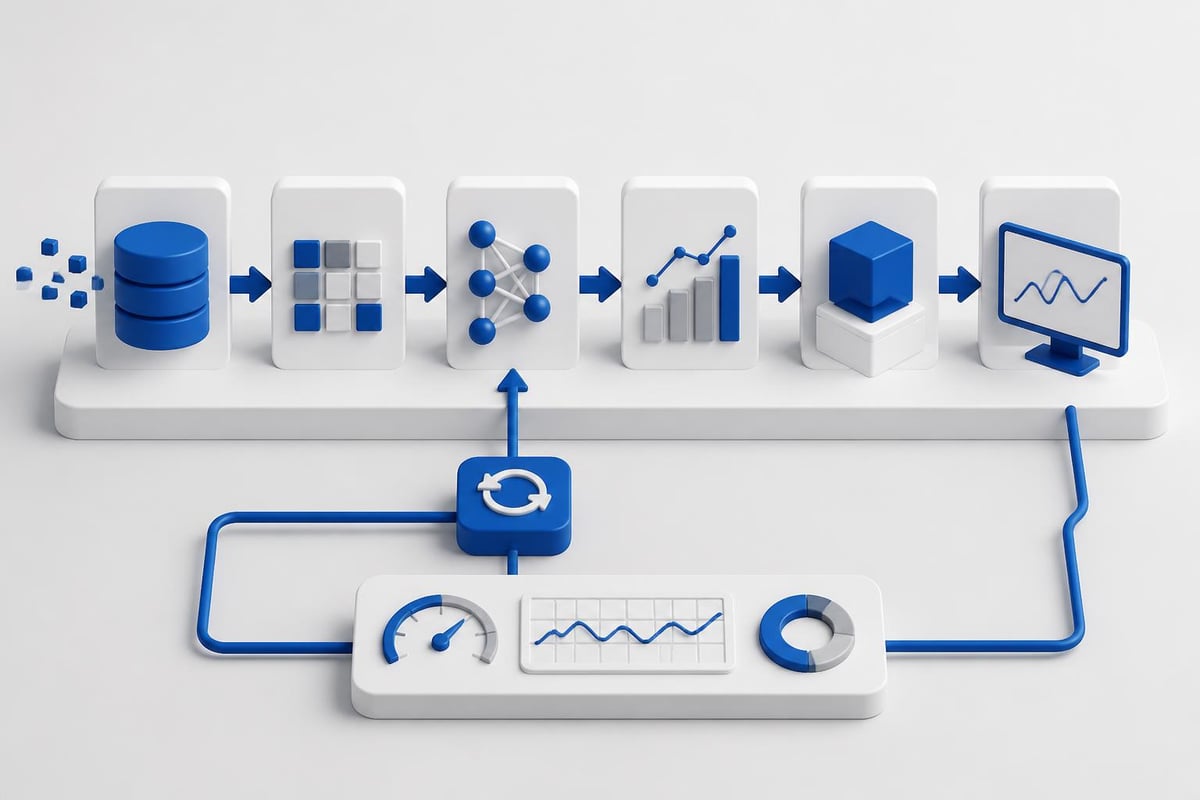
Build a dashboard that displays predictions, confidence levels, and recommended maintenance actions. Integrate alerting for high-risk predictions using webhooks or email notifications.
Generative AI Applications
Generative models let students build creative applications that showcase AI capabilities in compelling ways. Focus on practical integrations rather than training models from scratch.
AI Content Assistant
Build a writing assistant that helps users create better content. Integrate GPT-4 or Claude through their APIs to provide suggestions, rewrites, and expansions.
Create features like:
- Grammar and style checking
- Tone adjustment (formal, casual, technical)
- Content expansion from bullet points
- SEO optimization suggestions
- Plagiarism detection integration
Add a React or Vue frontend with real-time feedback as users type. Implement debouncing to avoid excessive API calls. Store user sessions and allow them to save drafts with version history.
For developers looking to understand prompt engineering and API integration patterns, the AI Developer Certification covers building production-ready applications with modern AI APIs, from prompt optimization to deployment workflows.

Image Generation Platform
Create a web application that generates images from text descriptions using Stable Diffusion, DALL-E, or Midjourney APIs. Add controls for style, aspect ratio, and refinement.
Build a queue system that handles multiple generation requests. Store generated images in object storage (S3, Cloudflare R2) with metadata for searching and filtering.
Advanced features:
- Image editing with inpainting
- Style transfer between images
- Batch generation with variations
- Prompt template library
- Social sharing functionality
Research indicates that students’ interests in AI courses align strongly with practical, creative applications they can showcase in portfolios.
Speech and Audio Projects
Audio processing projects teach signal processing, real-time data handling, and multimodal AI integration. These skills apply across voice assistants, accessibility tools, and media applications.
Voice Command System
Build a system that recognizes and executes voice commands. Use speech-to-text APIs (Whisper, Google Speech, AssemblyAI) combined with intent classification to trigger actions.
Implement wake word detection so the system only listens when activated. Map recognized intents to functions like setting reminders, controlling smart devices, or querying databases.
| Component | Technology | Purpose |
|---|---|---|
| Wake word | Porcupine | Activation trigger |
| STT | Whisper API | Speech transcription |
| Intent | Fine-tuned BERT | Command classification |
| TTS | ElevenLabs | Voice responses |
Add context awareness so the system remembers previous commands within a session. Build a dashboard showing command history, accuracy metrics, and frequently used actions.
Audio Transcription Service
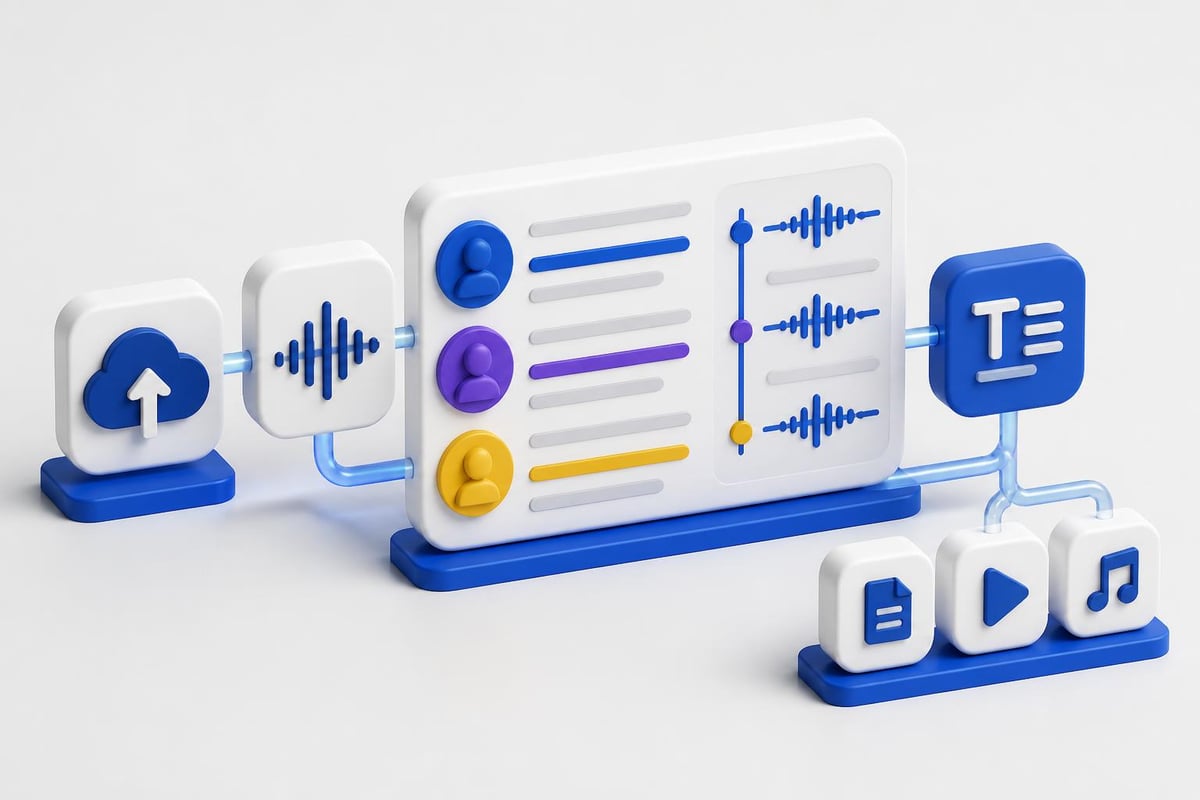
Create a service that transcribes audio files with speaker diarization, timestamps, and searchable text output. Process podcast episodes, meeting recordings, or lecture captures.
Use Whisper for transcription and pyannote for speaker separation. Generate SRT subtitle files, searchable transcripts, and key moment summaries.
Build batch processing with job queues (Celery, Bull). Track processing status, estimated completion times, and costs per minute of audio. Export transcripts in multiple formats (JSON, TXT, SRT, VTT).
Reinforcement Learning Experiments
RL projects demonstrate how agents learn from interaction. While complex, starting with game environments provides immediate visual feedback and clear success metrics.
Game-Playing Agent
Train an agent to play classic games using OpenAI Gym environments. Start with CartPole or LunarLander, then progress to Atari games.
Implement Q-learning or Deep Q-Networks (DQN). Track episode rewards, convergence speed, and strategy evolution. Visualize the learning process with reward curves and gameplay recordings.
Training pipeline:
- Environment setup and state representation
- Reward function design and tuning
- Experience replay buffer management
- Network architecture selection
- Hyperparameter optimization
- Evaluation and deployment
Run training sessions overnight on consumer hardware. Save checkpoints every 1000 episodes. Compare different algorithms and architectures systematically.
Resource Allocation Optimizer
Build an RL agent that optimizes resource allocation in simulated scenarios. Model problems like server load balancing, inventory management, or scheduling.
Create custom environments using Gym's API. Define state spaces (current allocations, demands, constraints), action spaces (allocation decisions), and reward signals (efficiency, cost, satisfaction).
This teaches the full cycle of RL problem formulation, which is often more challenging than implementation. Students learn to translate business problems into mathematical frameworks that agents can optimize.
Studies exploring Scratch for teaching AI concepts show that interactive, visual feedback accelerates learning, principles that apply equally to RL visualizations.
Deployment and MLOps
Production deployment separates academic exercises from real artificial intelligence projects for students. These skills determine whether code runs only on laptops or serves actual users.
Model Serving Infrastructure
Build a complete serving stack for ML models. Containerize models with Docker, deploy to cloud platforms, and implement monitoring.
Infrastructure components:
- Docker containers with model artifacts
- API gateway with authentication
- Load balancer for traffic distribution
- Metrics collection (Prometheus, Datadog)
- Logging pipeline for debugging
- Automated health checks
Deploy to AWS Lambda, Google Cloud Run, or Railway. Configure auto-scaling based on request volume. Set up staging and production environments with CI/CD pipelines.
| Platform | Cold Start | Scaling | Cost |
|---|---|---|---|
| Lambda | 1-3s | Automatic | Pay per invoke |
| Cloud Run | <1s | Automatic | Pay per use |
| Railway | Minimal | Manual | Flat rate |
Monitoring Dashboard
Create a dashboard that tracks model performance in production. Monitor accuracy drift, latency, error rates, and usage patterns.
Build alerting rules that trigger when metrics cross thresholds. Implement automated rollback if new deployments show degraded performance.
Log all predictions with inputs, outputs, and confidence scores. Use this data to identify edge cases and retrain models with real-world examples.
Additional AI coding tutorials cover integration patterns, API design, and deployment strategies for modern AI applications.
Data Engineering Foundations
Strong data pipelines enable every other AI project. Students who master data collection, cleaning, and preparation build better models faster.
Web Scraping Pipeline
Build a system that collects, processes, and stores data from websites. Create scrapers with Scrapy or Playwright that extract structured information.
Pipeline stages:
- Target identification and robots.txt compliance
- HTML parsing and data extraction
- Data validation and cleaning
- Deduplication and normalization
- Storage in structured databases
- Update scheduling and monitoring
Handle pagination, JavaScript rendering, and rate limiting. Store raw HTML alongside parsed data for reprocessing. Build retry logic for failed requests with exponential backoff.
Dataset Creation Tool
Create tooling that helps build high-quality training datasets. Build annotation interfaces, quality control workflows, and export utilities.
Implement label verification where multiple annotators label the same items. Calculate inter-annotator agreement scores. Identify ambiguous examples that need clearer guidelines.
Export datasets in standard formats (COCO, Pascal VOC, YOLO) for computer vision or JSONL for NLP tasks. Version datasets with clear metadata about collection methods and annotation procedures.
Many practical AI projects emphasize dataset quality as the foundation for model success.
Integration Projects
Real artificial intelligence projects for students involve connecting multiple services, managing state, and handling errors gracefully. These skills distinguish developers who ship from those who only prototype.
Multi-Model Orchestration
Build a system that routes requests to different models based on input characteristics. Use smaller, faster models for simple cases and larger models only when needed.
Implement fallback chains where cheaper APIs get first attempts. Route to expensive models only if confidence scores fall below thresholds. Track costs per request and optimize routing rules.
Create request queuing for batch processing during off-peak hours. Cache frequent queries. Implement request deduplication to avoid processing identical inputs multiple times.
Routing logic:
- Analyze input complexity and length
- Check cache for previous similar requests
- Select appropriate model based on requirements
- Execute with timeout and retry logic
- Log costs, latency, and quality metrics
- Update routing rules based on performance
Workflow Automation Platform
Build a platform where users create AI-powered workflows by chaining different operations. Think Zapier but specialized for AI tasks.
Create nodes for common operations: text analysis, image generation, data extraction, summarization, translation. Let users connect these visually and deploy workflows as APIs.
Store workflow definitions as JSON. Execute them using a job queue with proper error handling. Show execution logs and intermediate results for debugging.
Platform features like this demonstrate understanding of how programming conversational agents influences AI perception and practical application design.
Learning Resources and Next Steps
Once you've built initial projects, systematic learning accelerates growth. Combine hands-on building with structured courses and documentation study.
Focus on tools and frameworks actively used in production environments. Learn FastAPI over Flask, TypeScript over plain JavaScript, and Docker over traditional deployment. Modern stacks reduce debugging time and improve code quality.
Skill development priorities:
- API design and documentation
- Async programming patterns
- Error handling and retry logic
- Testing strategies for ML systems
- Monitoring and observability
- Cost optimization techniques
Build projects in public. Share code on GitHub with clear README files. Write documentation explaining architecture decisions and tradeoffs. Create demo videos showing functionality.
Contributing to open-source AI projects provides exposure to professional codebases. Review pull requests, fix bugs, and add features to libraries you use. This builds credibility and teaches collaboration skills.
Projects that balance complexity with real-world relevance create portfolio pieces that demonstrate capability to potential employers or clients.
Building artificial intelligence projects for students means creating real applications that solve actual problems, not just completing tutorials. The projects covered here teach API integration, deployment, monitoring, and the full development lifecycle that matters in production environments. Start with one project, ship it completely with documentation and tests, then move to the next. AI Code Central provides step-by-step tutorials, code examples, and project guides to help you build production-ready AI applications faster, from your first API integration to deploying scalable systems that serve real users.