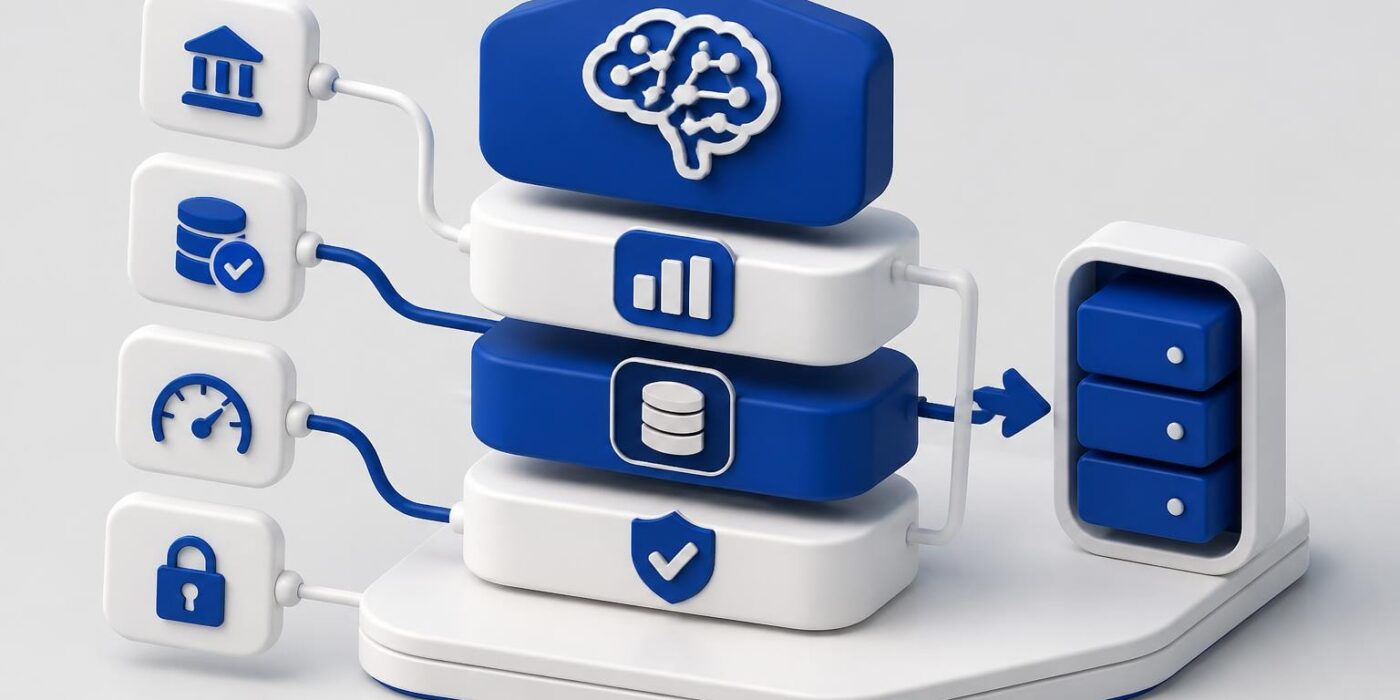
Building artificial intelligence systems in 2026 requires more than coding skills and API access. Developers must navigate technical specifications, regulatory frameworks, security standards, and operational constraints that define what makes an AI system production-ready. Understanding artificial intelligence requirements from the start prevents costly rework, ensures compliance, and builds trust with users and stakeholders.
Technical Infrastructure Requirements
AI systems demand specific computational resources and architecture decisions before you write a single line of model code. Hardware requirements vary dramatically based on model size, inference volume, and training needs.
For development environments, you need:
- Minimum 16GB RAM for running local language models
- GPU access for training custom models (NVIDIA A100 or equivalent)
- SSD storage with at least 100GB for datasets and model weights
- Network bandwidth capable of handling API calls at scale
Production deployments require scalable infrastructure. Cloud platforms like AWS, GCP, and Azure offer AI-specific instances, but you must architect for variable load. Consider containerization with Docker and orchestration through Kubernetes to handle traffic spikes without manual intervention.

Data Requirements and Quality Standards
AI systems are only as good as their training data. Data quality directly impacts model performance, bias, and reliability. Every AI project must establish clear data requirements before collection begins.
| Data Aspect | Minimum Requirement | Best Practice |
|---|---|---|
| Volume | 1,000+ examples per category | 10,000+ diverse examples |
| Labeling Accuracy | 95% correct labels | 98%+ with multi-reviewer validation |
| Format Consistency | Single structured format | Automated validation pipeline |
| Update Frequency | Monthly refresh | Real-time or weekly updates |
Your data pipeline needs validation at every stage. Implement automated checks for missing values, outliers, and distribution drift. Store raw data separately from processed data, and version both to enable reproducibility.
Privacy requirements add complexity. If you handle personal information, comply with GDPR, CCPA, and industry-specific regulations. Anonymize data where possible, implement access controls, and document data lineage from source to model.
Regulatory and Compliance Framework
Artificial intelligence requirements now include extensive regulatory obligations. The European Union AI Act categorizes AI systems by risk level, with high-risk applications facing strict compliance mandates.
High-risk AI systems include those used in:
- Employment and worker management
- Critical infrastructure operation
- Law enforcement and judicial decisions
- Biometric identification
- Credit scoring and insurance pricing
For high-risk applications, you must maintain technical documentation, implement human oversight mechanisms, ensure accuracy and robustness, and provide transparency to end users. The U.S. legal definition of artificial intelligence offers additional context for understanding how AI is characterized in American legal frameworks.
Standards and Certification Requirements
NIST provides foundational guidance through its AI standards and guidelines program, which aims to develop trustworthy AI systems. These standards cover risk management, transparency, and accountability.
Implement these core principles:
- Risk assessment before deployment
- Continuous monitoring of model performance
- Incident response procedures for failures
- Audit trails documenting decisions and changes
- User notification when AI systems make consequential decisions
Document everything. Compliance audits require proof that your system meets stated requirements. Version control your models, log predictions, and maintain records of training data sources and preprocessing steps.
Security Requirements for AI Systems
AI systems introduce unique security vulnerabilities beyond traditional software. Model security requires protection against adversarial attacks, data poisoning, and extraction attempts.
The OWASP AI Security Verification Standard provides testable security requirements specific to AI applications. These requirements address threats across the AI lifecycle, from training through deployment.
Critical security measures include:
- Input validation to prevent prompt injection and adversarial inputs
- Rate limiting on API endpoints to prevent abuse
- Authentication and authorization for model access
- Encryption for data at rest and in transit
- Model versioning to enable rollback after security incidents

Test your AI systems against adversarial attacks. Tools like Adversarial Robustness Toolbox (ART) help identify vulnerabilities before deployment. Implement anomaly detection to catch unusual patterns in production traffic.
Model Performance Requirements
Define clear performance thresholds before deployment. Performance requirements must be measurable, achievable, and aligned with business objectives.
| Metric | Development Target | Production Minimum | Monitoring Frequency |
|---|---|---|---|
| Accuracy | 90%+ | 85%+ | Daily |
| Latency (p95) | <500ms | <1000ms | Real-time |
| Throughput | 100 req/sec | 50 req/sec | Hourly |
| Error Rate | <1% | <3% | Real-time |
Monitor performance continuously. Models degrade over time as data distributions shift. Set up automated alerts when metrics fall below thresholds, and establish retraining schedules based on performance decay patterns.
For developers building AI-powered applications, understanding how to implement these requirements in real code is essential. The AI Developer Certification (Mammoth Club) program teaches you how to integrate OpenAI, Claude, and modern AI APIs into production-ready software while addressing security, performance, and compliance requirements through hands-on projects.

API and Integration Requirements
Most production AI systems rely on external APIs from OpenAI, Anthropic, Google, and other providers. API integration requirements ensure reliable operation and cost control.
When integrating AI APIs, implement:
- Retry logic with exponential backoff for transient failures
- Timeout handling to prevent indefinite waits
- Fallback mechanisms when primary API is unavailable
- Cost tracking to monitor spending per request
- Response validation to catch malformed or inappropriate outputs
Version your API integrations. Providers update models and deprecate older versions. Build abstraction layers that isolate API-specific code from business logic, making provider switches easier.
Error Handling and Resilience
AI systems fail in unique ways. Language models generate nonsensical outputs, vision models misclassify images, and APIs hit rate limits. Your error handling must account for both technical failures and logical errors.
Implement validation for AI outputs:
def validate_ai_response(response, expected_format):
    if not response or response.strip() == "":
        raise ValueError("Empty response from AI")

    if expected_format == "json":
        try:
            json.loads(response)
        except json.JSONDecodeError:
            raise ValueError("Invalid JSON in AI response")

    if contains_harmful_content(response):
        raise ValueError("Response failed content policy check")

    return True
Log all errors with context. Include the input that triggered the error, the model version, timestamp, and user ID. This data enables debugging and helps identify patterns in failures.
Testing and Quality Assurance Requirements
Testing AI systems requires different approaches than traditional software. Unit tests verify individual components, but you also need tests for model behavior, bias, and edge cases.
Your testing strategy should include:
- Unit tests for data preprocessing and postprocessing functions
- Integration tests for API calls and external dependencies
- Model performance tests against labeled test sets
- Bias and fairness tests across demographic groups
- Load tests to verify system handles expected traffic
- Adversarial tests to check robustness against attacks
Create a test dataset that represents real-world usage, including edge cases and adversarial examples. Update this dataset as you discover new failure modes in production.
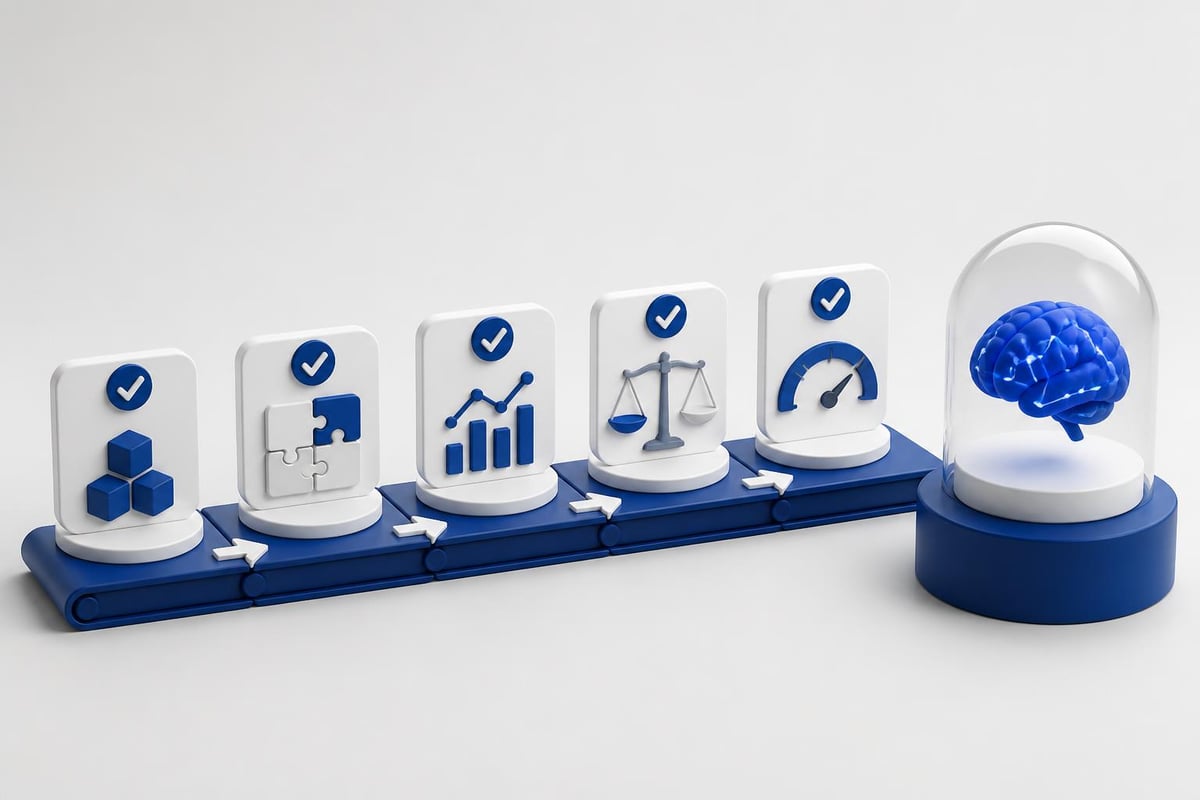
Automated testing catches regressions. Set up CI/CD pipelines that run your full test suite on every commit. Block deployments that fail critical tests or show significant performance degradation.
Documentation and Transparency Requirements
The European Commission’s guidelines for trustworthy AI emphasize transparency as a core requirement. Users must understand when they interact with AI systems and how those systems make decisions.
Documentation requirements include:
- System capabilities and limitations
- Training data sources and characteristics
- Model architecture and version
- Expected performance metrics
- Known biases and failure modes
- Human oversight mechanisms
- Contact information for issues
Provide user-facing documentation in plain language. Technical teams need detailed system documentation, but end users require simplified explanations. Build documentation into your interface where appropriate.
For high-stakes decisions, explain individual predictions. SHAP values, LIME, and attention visualization help users understand why the model produced specific outputs. Implementing these explainability features often becomes a regulatory requirement.
Operational Requirements for AI Systems
Running AI in production demands ongoing operational work beyond initial deployment. Operational requirements ensure your system remains reliable, performant, and compliant over time.
Establish these operational processes:
| Process | Frequency | Owner | Documentation |
|---|---|---|---|
| Model retraining | Monthly or triggered | ML Engineer | Training logs, metrics |
| Performance review | Weekly | Product team | Dashboards, reports |
| Security audit | Quarterly | Security team | Audit reports, fixes |
| Compliance check | Quarterly | Legal/Compliance | Compliance docs |
| Incident response | As needed | On-call team | Incident reports |
Monitor resource usage closely. AI systems consume significant compute and memory. Set up alerts for unusual resource consumption that might indicate attacks or system issues.
When exploring AI for programming use cases, operational requirements often determine success more than model accuracy. A slightly less accurate model that runs reliably beats a cutting-edge model that crashes under load.
Monitoring and Observability
Production AI systems need comprehensive monitoring. Observability requirements go beyond tracking uptime and errors.
Monitor these AI-specific metrics:
- Prediction distribution to detect data drift
- Confidence scores to identify uncertain predictions
- Token usage for language model costs
- Latency percentiles (p50, p95, p99)
- User feedback on prediction quality
- Feature importance drift in model decisions
Build dashboards that show both technical metrics and business outcomes. Connect AI performance to user satisfaction, conversion rates, or other KPIs that matter to stakeholders.
Set up alerting thresholds based on historical patterns. A 10% drop in accuracy might be normal variation or signal serious degradation. Use statistical methods to distinguish signal from noise.
Training and Deployment Requirements
Deploying AI models involves more than pushing code to production. Deployment requirements ensure smooth transitions and enable quick rollbacks when issues arise.
Before deploying a new model:
- Validate performance on held-out test data
- Run A/B tests comparing new and existing models
- Deploy to staging environment first
- Test with real traffic using canary deployments
- Monitor closely for the first 48 hours
- Document changes in release notes
Implement blue-green deployments or feature flags for instant rollback. Keep the previous model version running in parallel initially. If the new model shows problems, switch traffic back immediately.
For teams working on artificial intelligence based projects, deployment automation reduces errors and accelerates iteration. Infrastructure as code ensures consistent environments across development, staging, and production.
Cost and Resource Management
AI systems can become expensive quickly. Cost requirements and budgets prevent surprise bills and ensure sustainable operation.
Track costs at multiple levels:
- Development costs: compute for training, data labeling, experimentation
- API costs: per-token or per-request charges from providers
- Infrastructure costs: hosting, storage, networking
- Monitoring costs: logging, metrics, observability tools
- Maintenance costs: retraining, updates, security patches
Set spending limits on API keys. Most providers offer usage caps to prevent runaway costs. Monitor spending daily and investigate unexpected spikes immediately.
Optimize inference costs by caching common requests, batching API calls, and choosing appropriate model sizes. A smaller, faster model often provides better ROI than the largest available model.
Ethical AI Requirements
Beyond legal compliance, ethical artificial intelligence requirements ensure your system benefits users without causing harm. Ethical considerations shape design decisions and acceptable use cases.
Key ethical requirements include:
- Fairness: Equal treatment across demographic groups
- Privacy: Protection of user data and consent
- Transparency: Clear communication about AI use
- Accountability: Human oversight and appeal processes
- Safety: Preventing harmful outputs and misuse
Test for bias systematically. Evaluate model performance across different demographic groups, geographic regions, and use cases. If you find disparate impact, investigate root causes in training data or model architecture.
Build human oversight into critical decisions. AI can assist, but humans should make final decisions in high-stakes scenarios like hiring, lending, or medical diagnosis. Document the human-in-the-loop process clearly.
Model Governance and Version Control
As AI systems mature, governance requirements become essential for managing multiple models, teams, and stakeholders. Without governance, you lose track of what models are running where and why.
Implement a model registry that tracks:
- Model version and creation date
- Training data version and source
- Performance metrics on test data
- Approval status and reviewers
- Deployment history and current locations
- Known issues and limitations
Version control everything: code, models, data, and configuration. Git works for code, but you need specialized tools like DVC or MLflow for models and data. Tag releases clearly and maintain detailed changelogs.
Establish approval processes for production deployments. Require peer review of code changes, validation of performance metrics, and sign-off from stakeholders before deploying models that affect users.
For developers learning through artificial intelligence projects for students, practicing good governance early builds habits that scale to production environments.
Understanding artificial intelligence requirements across technical, regulatory, security, and operational dimensions enables you to build AI systems that work reliably in production. These requirements evolve as regulations tighten and best practices emerge, so continuous learning remains essential. AI Code Central offers practical tutorials and real-world projects that teach you how to implement these requirements in production-ready code, helping you ship AI features that meet professional standards and deliver real value to users.