
Choosing the right artificial intelligence related courses can make the difference between theoretical knowledge and shipping production-ready AI applications. Developers in 2026 need more than academic lectures – they need hands-on training in API integration, prompt engineering, model deployment, and workflow automation. This guide breaks down the course types, platforms, and skills that matter most when you're building AI-powered software in real-world development environments.
Types of AI Courses for Practical Development
Different artificial intelligence related courses serve different learning goals. Understanding the categories helps you pick the right training path.
Foundational AI Theory Courses
These courses cover machine learning algorithms, neural networks, and computational agents. MIT OpenCourseWare’s Artificial Intelligence course introduces knowledge representation and basic problem-solving methods that form the conceptual backbone of AI systems.
Core topics typically include:
- Supervised and unsupervised learning
- Neural network architectures
- Search algorithms and optimization
- Probabilistic reasoning
Theory-focused programs provide essential context but often lack practical API integration and deployment workflows.

API Integration and Applied Development
Modern AI development centers on using pre-trained models through APIs rather than building from scratch. Courses focused on practical integration teach you how to work with OpenAI, Anthropic, Google, and other providers.
Key skills covered:
- Authentication and API key management
- Request formatting and response parsing
- Error handling and rate limiting
- Token management and cost optimization
Applied courses prioritize shipping features over mathematical proofs. You learn to integrate GPT-4, Claude, or Gemini into actual applications with proper error handling and production considerations.
University Programs vs. Self-Paced Learning
The format and institution behind artificial intelligence related courses significantly impacts learning outcomes and time investment.
| Program Type | Duration | Cost Range | Best For |
|---|---|---|---|
| University Certificate | 6-12 months | $3,000-$15,000 | Career changers, credential seekers |
| Online Bootcamp | 8-16 weeks | $500-$5,000 | Working developers, fast learners |
| Self-Paced Platform | Flexible | $0-$100/month | Self-motivated learners |
| Corporate Training | 1-4 weeks | Employer-paid | Team upskilling |
Northwestern University’s AI certificate program teaches implementation of AI and deep learning algorithms in Python. The structured format works well for learners who need external accountability and recognized credentials.
UC Berkeley Extension’s AI Foundations course focuses on deep learning frameworks with applications across multiple domains. University programs typically emphasize breadth over depth in specific tools.
Graduate-Level AI Certificates
Graduate certificates require stronger prerequisites but offer deeper technical coverage. Purdue’s Foundations of AI Graduate Certificate provides fast-track training for applying foundational knowledge in professional settings.
These programs assume comfort with calculus, linear algebra, and programming fundamentals. The mathematical rigor helps you understand model behavior but may not directly translate to API-based development workflows.
Skills-Based Course Selection
Choose artificial intelligence related courses based on the specific capabilities you need to build and ship.
Prompt Engineering and LLM Workflows
Prompt engineering has become critical for developers working with large language models. Effective courses teach:
- Structured prompt design – Few-shot examples, chain-of-thought reasoning, role assignment
- Context window management – Chunking strategies, retrieval augmentation, token optimization
- Output formatting – JSON mode, structured responses, validation patterns
- Testing and iteration – Systematic evaluation, version control for prompts
These skills directly impact application quality when you're building chatbots, content generators, or automation tools.
Backend Integration and Deployment
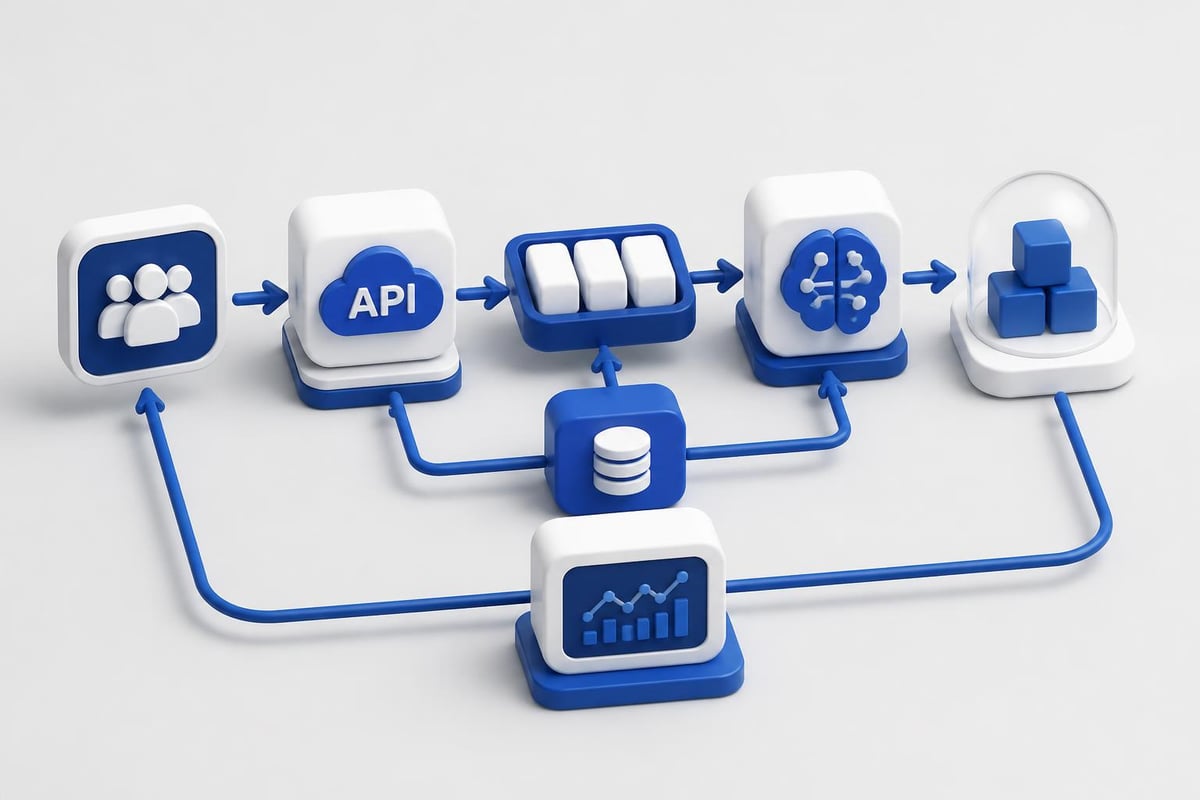
Production AI applications require proper backend architecture. Look for courses covering:
- Queue management for async processing
- Caching strategies to reduce API costs
- Monitoring and logging for model performance
- Security patterns for API key protection
- Scaling considerations for high-traffic applications
Developers building real products need to understand how AI calls fit into broader system architecture. For practical guidance on building production-ready AI features, the AI Developer Certification (Mammoth Club) covers prompt engineering, backend workflows, automation, and deployment through hands-on projects designed for developers who want to ship real AI features rather than just consume theory.

Free vs. Paid Course Options
Budget considerations shape course selection, but quality varies significantly across price points.
High-Quality Free Resources
David L. Poole and Alan K. Mackworth’s textbook covers fundamental AI concepts including deep learning and social impact. The free resource provides comprehensive theory without practical API integration.
MIT’s collection of foundational AI courses offers starting points for machine learning and related fields. These resources excel at concept explanation but require supplementary practice for real-world implementation.
Free resources work best when:
- You're exploring AI before committing to paid training
- You need reference material for specific concepts
- You're supplementing hands-on projects with theory
- Budget constraints prevent paid options
Paid Courses and Certifications
Paid artificial intelligence related courses typically provide:
- Structured learning paths with clear progression
- Project feedback from instructors or peers
- Updated content reflecting current tools and APIs
- Career support including resume review and job placement
The investment makes sense when you need accountability, credentials, or time-efficient learning. Career switchers often benefit more from paid structured programs than experienced developers.
Curated Learning Resources and Communities
Beyond individual courses, curated collections help you navigate the vast AI learning landscape.
The Awesome Artificial Intelligence repository maintains lists of courses, books, video lectures, and papers. The community-driven resource helps you discover specialized training for niche topics.
Building a Learning Path
Effective AI education combines multiple resource types:
- Foundational course – Core concepts and terminology
- Hands-on tutorials – Practical implementation with specific APIs
- Real projects – Building complete applications from scratch
- Community engagement – Forums, Discord servers, or study groups
- Continuous updates – Following changelog and API updates
Developers who combine structured courses with practical projects ship AI features faster than those who rely solely on theory.
Platform-Specific Training Programs
Different course platforms serve different learning styles and goals.
University Extension Programs
UC San Diego’s Extended Studies offers AI courses for both technical and non-technical learners. The range covers AI development fundamentals through responsible AI practices.
Extension programs bridge academic rigor with professional applicability. They cost more than online platforms but less than full degree programs.
Professional Education Platforms
Harvard’s professional AI courses include "AI for Leaders" and "Future Proof with AI" aimed at various professional needs. These courses target decision-makers and managers more than hands-on developers.
Platform comparison:
| Platform | Focus Area | Typical Price | Update Frequency |
|---|---|---|---|
| University Extension | Academic + Applied | $1,000-$5,000 per course | Annually |
| Bootcamp | Career Transition | $3,000-$15,000 full program | Quarterly |
| Online Platform | Self-Paced Skills | $20-$100/month | Monthly |
| Corporate Training | Team Skills | $500-$2,000 per person | As needed |
Choose based on your learning style, budget, and timeline for skill acquisition.
Specialized AI Development Tracks
Beyond general artificial intelligence related courses, specialized tracks focus on specific application domains.
Computer Vision and Image Processing
Courses in this track teach:
- Image classification with CNNs
- Object detection frameworks (YOLO, R-CNN)
- Facial recognition implementation
- OCR and document processing
- API integration for Vision APIs
Developers building visual applications need domain-specific training beyond general AI concepts.
Natural Language Processing
NLP-focused programs cover:
- Text classification and sentiment analysis
- Named entity recognition (NER)
- Language model fine-tuning
- Embedding generation and similarity search
- Multilingual processing considerations
These skills apply directly to chatbots, content analysis, and search applications.
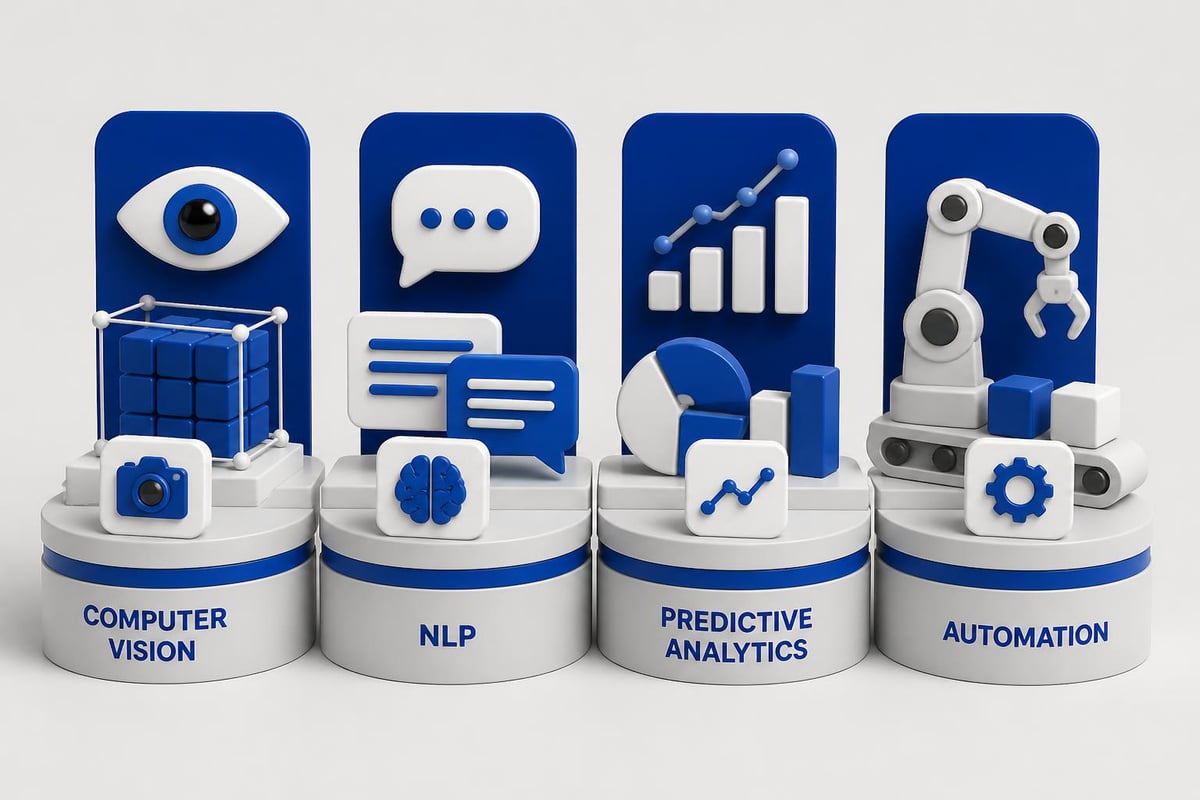
Automation and Workflow Integration
Automation courses teach you to:
- Chain multiple AI calls into workflows
- Build decision trees with conditional logic
- Integrate with tools like Zapier, Make, or n8n
- Handle errors and retries gracefully
- Monitor costs and performance
Workflow automation represents one of the fastest-growing AI application areas for developers.
Evaluating Course Quality and Relevance
Not all artificial intelligence related courses deliver equal value. Use these criteria to evaluate options.
Curriculum Recency
AI tools change rapidly. Check when course content was last updated. Courses referencing GPT-3 instead of GPT-4, or ignoring Claude and Gemini, likely contain outdated information.
Red flags:
- No mention of current model versions
- Examples using deprecated APIs
- Missing coverage of prompt engineering
- Focus on building models instead of using APIs
Current courses acknowledge that most developers integrate pre-trained models rather than training from scratch.
Project-Based vs. Lecture-Heavy
The best courses emphasize building over watching. Look for programs requiring you to:
- Build complete applications with AI features
- Deploy projects to production environments
- Handle real API integration challenges
- Debug actual code, not pseudocode
Projects force you to encounter and solve implementation problems theory alone won't address. See artificial intelligence related projects for examples of hands-on work that demonstrates real competency.
Course Prerequisites and Background Preparation
Different artificial intelligence related courses require different entry knowledge.
Programming Fundamentals
Most AI development courses assume:
- Comfort with at least one programming language (Python, JavaScript, or TypeScript)
- Understanding of APIs and HTTP requests
- Basic command-line usage
- Version control with Git
If you're missing these foundations, start with general programming courses before diving into AI-specific training.
Mathematical Background
Theory-heavy courses require:
- Linear algebra (vectors, matrices, transformations)
- Calculus (derivatives, gradients, optimization)
- Probability and statistics
- Discrete mathematics
API-focused courses typically need:
- Basic arithmetic for token counting
- Understanding of probability for temperature settings
- Simple statistics for evaluating outputs
Applied development courses minimize mathematical prerequisites in favor of practical implementation skills.
Time Investment and Learning Velocity
The time required for artificial intelligence related courses varies significantly.
| Course Type | Weekly Hours | Total Duration | Skill Level Achieved |
|---|---|---|---|
| Intensive Bootcamp | 30-40 hours | 8-12 weeks | Job-ready basics |
| University Certificate | 10-15 hours | 6-12 months | Comprehensive foundation |
| Self-Paced Platform | 5-10 hours | 2-6 months | Variable by effort |
| Weekend Workshop | 8-16 hours | 2-3 days | Specific skill focus |
Faster isn't always better. Rushed courses skip important debugging practice and architectural considerations.
Balancing Work and Learning
Working developers need courses that fit irregular schedules:
- Asynchronous content you can consume anytime
- Modular lessons that work in 20-30 minute blocks
- Practical exercises you can apply immediately at work
- Lifetime access allowing you to revisit content
Self-paced formats accommodate professional schedules better than fixed-schedule bootcamps.
Certification Value and Career Impact
Certificates from artificial intelligence related courses signal competency to employers but vary in market recognition.
Employer Perspectives on AI Certifications
Hiring managers evaluate:
- Portfolio projects showing shipped AI features
- GitHub repositories with clean, documented code
- Technical interviews demonstrating problem-solving
- Certifications from recognized institutions
Certificates supplement but don't replace demonstrable skills. A strong portfolio of AI projects matters more than credentials without supporting work.
Building Credibility Through Projects
Rather than collecting certificates, focus on:
- Building production applications using AI APIs
- Contributing to open-source AI tools
- Writing technical blog posts explaining implementations
- Speaking at meetups or conferences about AI development
Real-world experience outweighs academic credentials for most development roles.
Continuous Learning in AI Development
Artificial intelligence related courses provide foundations, but the field evolves too quickly for one-time training.
Staying Current After Course Completion
Maintain skills through:
- API documentation reviews when providers release updates
- Changelog monitoring for models you use in production
- Technical communities discussing implementation patterns
- Experimentation with new models and capabilities
- Paid newsletters summarizing key developments
The initial course gets you started. Continuous learning keeps skills relevant as capabilities expand and pricing changes.
Advanced Learning Paths
After foundational courses, specialize in:
- Fine-tuning models for specific use cases
- Building RAG (Retrieval Augmented Generation) systems
- Implementing multi-agent workflows
- Optimizing costs for high-volume applications
- Security and safety considerations
Advanced topics require strong foundations from introductory courses.
Choosing Your First AI Course
For developers starting their AI journey in 2026, prioritize courses that:
- Focus on API integration over model training
- Include real projects you'll deploy
- Cover current tools (GPT-4, Claude 3, Gemini)
- Teach prompt engineering systematically
- Address production concerns like cost and security
Start with applied courses before diving into theory. You'll learn faster by building and shipping actual features. The AI Code Central tutorials provide practical examples and workflows you can implement immediately while supplementing formal coursework.
Artificial intelligence related courses provide structured learning paths, but success depends on choosing programs that match your development goals and learning style. The right training combines theory with hands-on API integration, preparing you to ship production-ready AI features rather than just understanding concepts. AI Code Central offers practical coding tutorials, real-world projects, and modern workflows that help developers build, ship, and scale AI-powered applications using the tools and techniques that matter in 2026's fast-moving development landscape.