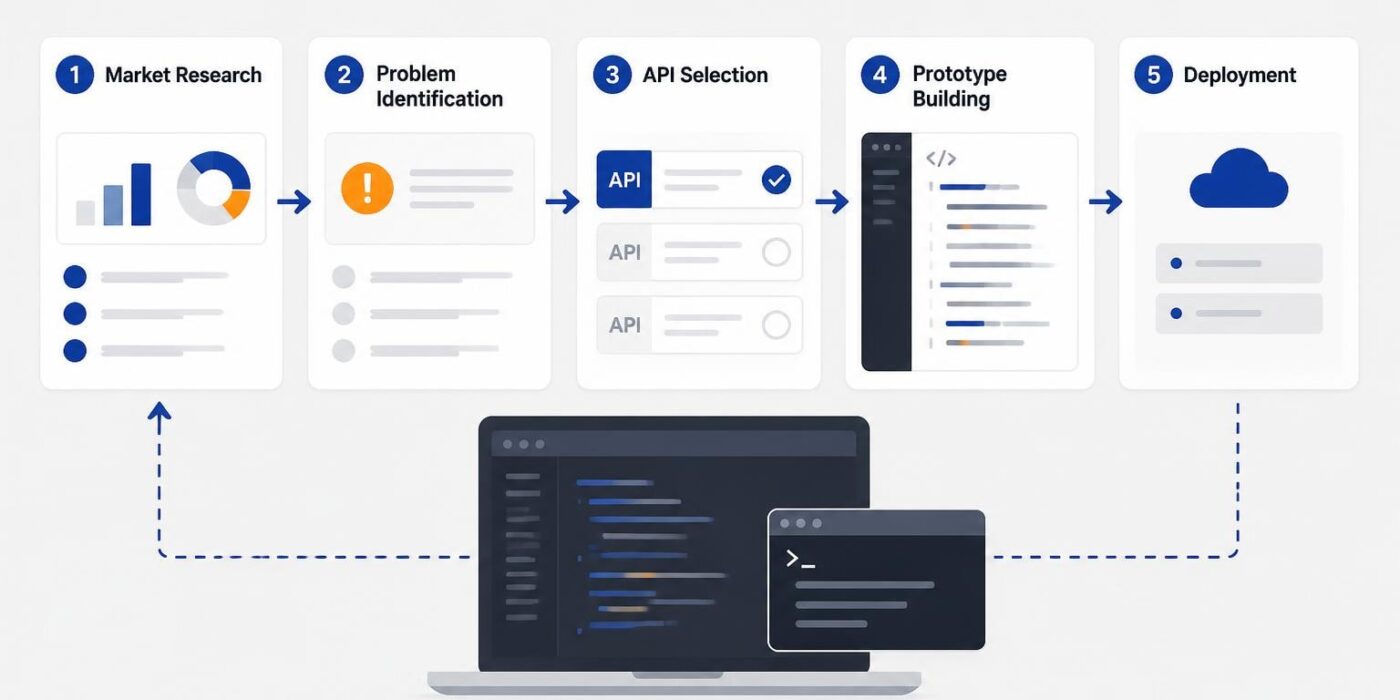
Choosing the right ai niche can make the difference between shipping a product that gains traction and spending months building something nobody wants. The AI landscape in 2026 is crowded with generalist tools, but niche applications solve specific problems better, faster, and with less competition. For developers, this means focusing on vertical markets, specialized workflows, or underserved industries where AI integration creates immediate value. This article breaks down how to identify, validate, and build for a profitable ai niche using practical frameworks and real-world examples.
Why Niche AI Applications Win
Generic AI tools face massive competition from well-funded platforms like OpenAI, Anthropic, and Google. Niche applications avoid this fight entirely by targeting specific user groups with precise pain points.
The Vertical SaaS Advantage
Vertical SaaS focuses on one industry rather than trying to serve everyone. An AI tool built for dental practices, construction firms, or legal document review can charge premium prices because it solves domain-specific problems that generalist tools ignore.
- Higher customer lifetime value: Niche users pay more for solutions that understand their workflow
- Lower customer acquisition cost: Targeted marketing reaches decision-makers directly
- Stronger product-market fit: Features align with actual daily tasks, not theoretical use cases
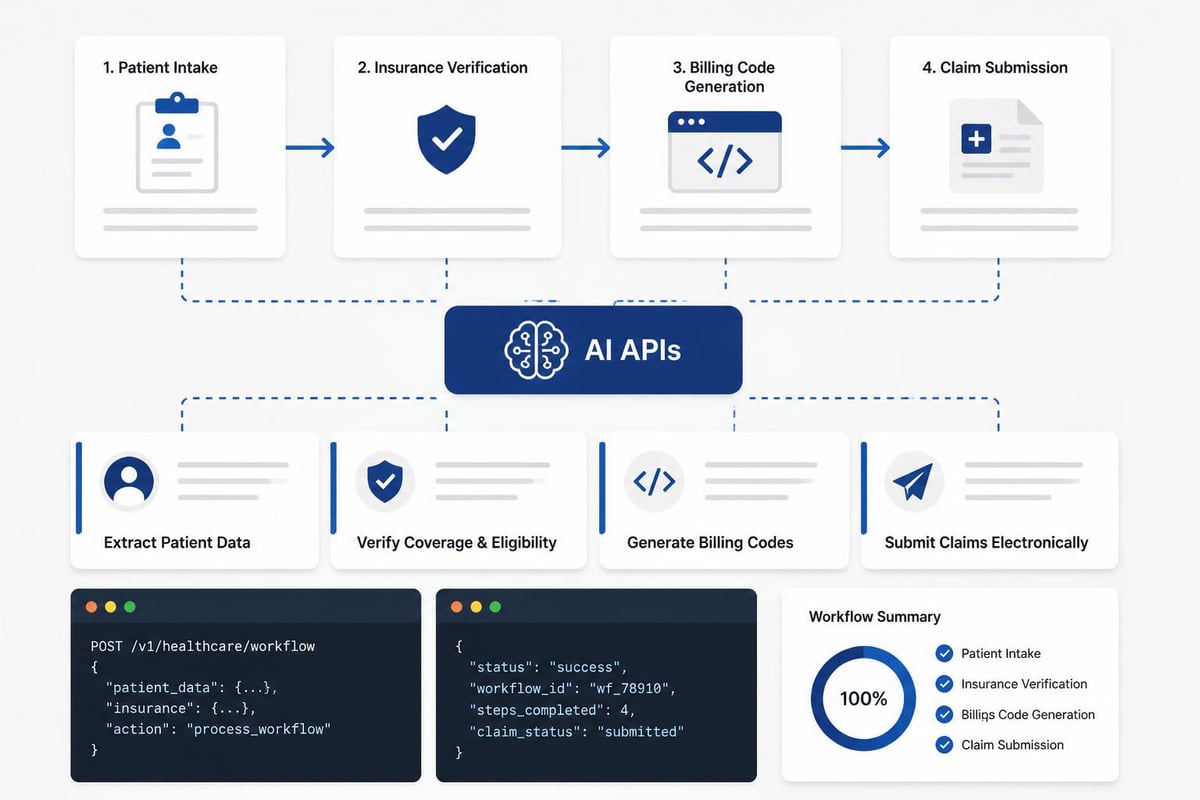
Example: Instead of building a generic chatbot, build one that handles patient intake for dermatology clinics. It knows medical terminology, insurance verification steps, and appointment scheduling specific to skin care practices.
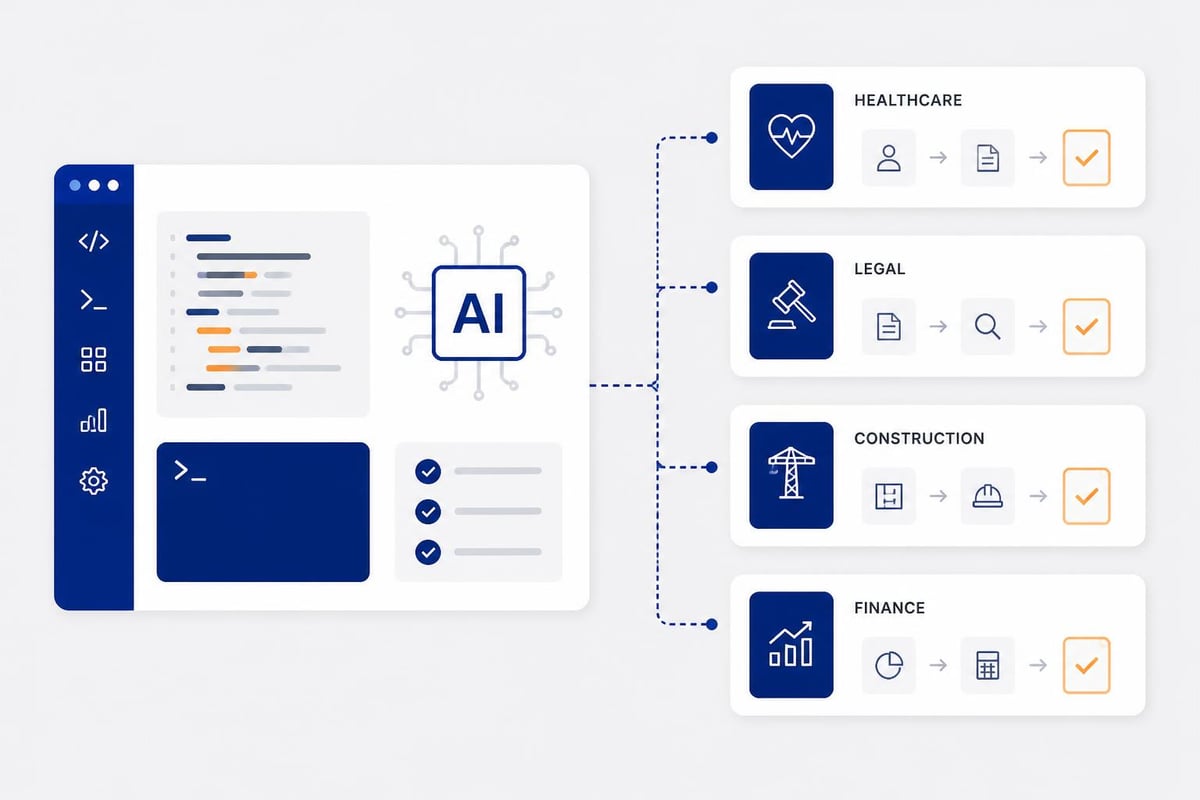
Developers who understand both AI capabilities and a specific industry can ship products faster than teams trying to master every possible use case. Growing AI and machine learning niches continue to expand as industries digitize their legacy workflows.
Finding Your AI Niche: Three Validation Methods
Picking an ai niche requires more than guessing what might work. These three methods help developers validate demand before writing production code.
Method 1: Reverse Engineer Existing Workflows
Identify manual processes that professionals repeat daily. Look for tasks that involve:
- Pattern recognition across documents, images, or data sets
- Repetitive decision-making based on known criteria
- Data transformation from unstructured to structured formats
- Content generation following templates or brand guidelines
Implementation: Shadow users in target industries for a week. Record every repeated task. Map which tasks AI APIs (OpenAI, Anthropic, Google) can automate with minimal custom training.
Method 2: Monitor API Usage Patterns
Public AI platforms publish usage trends and popular endpoints. These reveal where developers already build solutions.
| API Category | Common Use Cases | Niche Opportunities |
|---|---|---|
| Text Generation | Blog posts, emails | Legal briefs, medical notes |
| Image Analysis | General object detection | Defect inspection, inventory counting |
| Audio Transcription | Meeting notes | Court reporting, medical dictation |
Check which features get requested in API forums but aren't addressed by major platforms. These gaps represent opportunities.
Method 3: Analyze Competitor Pricing
Premium pricing signals strong product-market fit. If competitors charge $200+ per user monthly in a category, customers value the solution enough to pay.
Research pricing pages for tools in your target space. Tools charging high prices with limited feature sets often indicate an underserved market willing to pay for working solutions. Uncovering niche markets using AI demonstrates how AI itself helps identify these opportunities within existing research.
Five High-Potential AI Niche Categories for 2026
These categories show strong growth indicators: rising API usage, increasing VC investment, and active developer communities building specialized tools.
Edge AI for Real-Time Processing
Edge AI runs models directly on devices rather than cloud servers. This matters for applications requiring instant responses without internet connectivity.
Use cases:
- Quality control on manufacturing lines
- Retail inventory management
- Security camera analysis
- Medical device diagnostics
Developer advantage: Lower ongoing cloud costs, better privacy compliance, faster response times. Build once, deploy to millions of devices.
Legal Document Intelligence
Law firms pay premium rates for tools that understand legal context, cite precedent correctly, and maintain chain of custody for documents.
- Contract analysis and risk flagging
- Discovery document review
- Citation verification across case law
- Regulatory compliance checking
This ai niche requires domain expertise but offers high margins and long customer retention. Legal workflows change slowly, giving developers time to build comprehensive solutions.
Healthcare Administrative Automation
Medical billing, insurance verification, and patient communication involve complex rule-based systems that AI handles well.
Technical requirements:
- HIPAA compliance from day one
- Integration with EHR systems (Epic, Cerner)
- Structured output formats for billing codes
- Audit trails for every AI decision
Build backend APIs that connect to existing healthcare software rather than trying to replace entire practice management systems. Five niche AI arenas poised for growth identifies healthcare administration as a top opportunity in 2026.
Specialized Content Operations
Every company produces content, but only some need generalist writing tools. Target specific content types with domain rules.
- E-commerce product descriptions following brand voice and SEO requirements
- Technical documentation maintaining consistent terminology and structure
- Regulatory filings adhering to compliance language and formatting
- Localization workflows preserving context across languages
The NICHE dataset of engineered ML projects provides examples of how specialized models outperform general-purpose ones in specific domains.
Field Service Optimization
Technicians, inspectors, and field workers need mobile-first AI tools that work offline and integrate with existing scheduling systems.
| Feature | Why It Matters | Implementation Approach |
|---|---|---|
| Offline image analysis | Job sites lack reliable internet | Deploy models to device using TensorFlow Lite |
| Voice note transcription | Hands-free data entry | Integrate Whisper API with local caching |
| Automated report generation | Reduce admin time | Template system with structured data extraction |
| Parts identification | Speed up repairs | Custom vision model trained on manufacturer catalogs |
This ai niche combines multiple AI capabilities (vision, speech, text) into cohesive workflows for specific industries like HVAC, electrical, or plumbing.
Building for Your AI Niche: Technical Implementation
Once you've validated demand, focus on shipping a working prototype within 30 days. Here's the build sequence that works.
Week 1: Choose Your Core AI Capability
Pick one AI function your niche needs most. Don't try to implement every feature at launch.
Decision framework:
- Can you achieve 80% accuracy with existing APIs?
- Does the output require extensive post-processing?
- How often will the model need updates or retraining?
For most niches, start with OpenAI or Anthropic APIs rather than training custom models. Custom models make sense only when you have proprietary training data or need specific performance characteristics.
Week 2: Build the Integration Layer
Your users don't interact directly with AI APIs. They use your interface, which calls APIs behind the scenes.
Architecture components:
- Request queue for handling rate limits
- Caching layer for repeated queries
- Error handling for API failures
- Cost tracking per user/request
Store API responses in your database. This enables auditing, debugging, and potentially reducing future API calls by reusing previous results.
Week 3: Add Domain-Specific Rules
Raw AI output rarely matches niche requirements without post-processing. Layer business logic on top of API responses.
def process_legal_document(raw_ai_output, jurisdiction):
    # Add required disclaimers
    output = add_jurisdiction_disclaimers(raw_ai_output, jurisdiction)

    # Format citations according to Bluebook style
    output = format_citations(output, style="bluebook")

    # Flag high-risk clauses for human review
    output = identify_risk_clauses(output)

    return output
This wrapper code transforms generic AI into niche-specific value. It's where most of your competitive advantage lives.
Week 4: Ship to First Users
Deploy the minimal version that solves one workflow completely. Get feedback from 5-10 users in your target niche.
- Set up usage monitoring and error logging
- Track which features users actually use
- Identify where AI output quality falls short
- Measure time saved versus manual processes
Many developers building for specialized markets find value in structured learning paths that combine AI fundamentals with production deployment skills. The AI Developer Certification (Mammoth Club) teaches developers how to integrate modern AI APIs into production-ready software through real-world projects, covering everything from prompt engineering to backend workflows and deployment strategies.

Pricing Your Niche AI Product
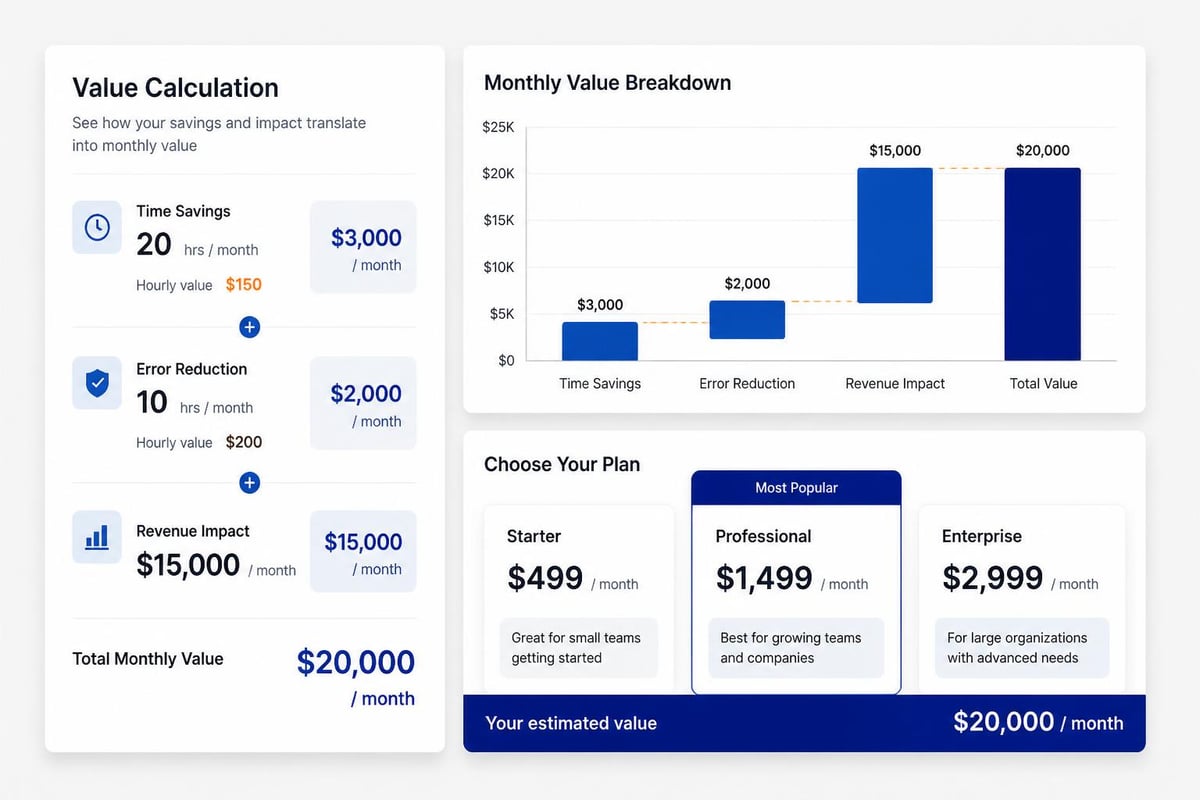
Niche products support premium pricing because they solve expensive problems or save significant time. Use value-based pricing rather than cost-plus.
Calculate Customer Value Metrics
Quantify what your AI automation provides:
- Hours saved per week × hourly rate = monthly value
- Errors prevented × cost per error = risk reduction value
- Revenue enabled through faster processes = growth value
Price at 10-20% of the value you create monthly. A tool that saves lawyers 10 hours per week ($5,000 in billable time) can easily charge $500-1,000 per month.
Tiered Pricing by Usage
Most AI applications have variable costs (API calls). Structure pricing to maintain margins across usage levels.
| Tier | Monthly Price | Included API Calls | Overage Cost |
|---|---|---|---|
| Starter | $99 | 1,000 | $0.15 per call |
| Professional | $299 | 5,000 | $0.10 per call |
| Enterprise | $999 | 25,000 | $0.05 per call |
Track actual API costs per customer and adjust pricing quarterly. Early customers often under-utilize features, making them more profitable than later heavy users.
Scaling Your AI Niche Business
Growth in niche markets follows different patterns than consumer apps. You're targeting hundreds or thousands of customers, not millions.
Distribution Channels That Work
Industry conferences: One speaking slot at a niche conference generates more qualified leads than months of content marketing.
Integration partnerships: Build connectors to tools your target market already uses. A Salesforce or HubSpot integration puts your product in front of existing users.
Case studies with metrics: Niche buyers make decisions based on proven ROI from similar companies. Publish detailed case studies showing specific results.
Developers often overlook that app niches awaiting their AI moment exist across dozens of daily task categories where AI integration can simplify workflows significantly.
When to Expand Beyond Your Initial Niche
Stay focused on your first niche until you hit $500K annual revenue or 50+ paying customers. Expanding too early dilutes your product focus and slows development velocity.
Expansion indicators:
- Feature requests from adjacent industries using similar workflows
- Competitors launching in related niches using your approach
- Existing customers asking for additional modules for different departments
- API usage patterns showing capabilities you haven't productized
Your second niche should share technical infrastructure with your first. If you built document analysis for legal firms, expanding to accounting firms makes more sense than jumping to healthcare imaging.
Common AI Niche Mistakes to Avoid
These mistakes slow growth and waste development time. Watch for them in your own process.
Building Features Nobody Asked For
AI capabilities are exciting. Resist adding every new model or API feature unless customers specifically request it. Each feature adds maintenance overhead and complexity.
Instead: Maintain a feature request log. Only build when you see the same request from 3+ different customers.
Ignoring Data Privacy from the Start
Many niches (healthcare, legal, finance) have strict data handling requirements. Retrofitting compliance is expensive and slow.
Day one requirements:
- Data encryption at rest and in transit
- Clear data retention policies
- API call logging with PII redaction
- Customer data isolation in multi-tenant systems
Competing on AI Model Quality Alone
Your niche value comes from domain integration, not model performance. A slightly worse model with perfect workflow integration beats a better model requiring manual data preparation.
Focus development time on connectors, templates, and automation around the AI, not on tweaking model parameters.
Underestimating Support Requirements
Niche customers expect expert support. Budget for technical support staff who understand both your AI implementation and the customer's industry context.
Plan for 5-10% of revenue going to support costs. High-touch support in niche markets builds retention and generates product improvement ideas.
Measuring Success in Your AI Niche
Track metrics that matter for niche products. Standard SaaS metrics apply, but add ai niche-specific indicators.
Key Performance Indicators
API success rate: Percentage of AI calls that produce usable output without human intervention. Target 85%+ for production quality.
Time to value: Days from signup to first successful workflow automation. Niche products should deliver value within one week.
Feature adoption rate: Percentage of users actively using each AI feature. Low adoption indicates poor product-market fit for that capability.
Customer concentration: Revenue from top 10 customers as percentage of total. Above 40% signals dependency risk in niche markets.
Usage Patterns to Monitor
Track which AI features users adopt and which they ignore. High-usage features indicate strong product-market fit. Low-usage features might solve the wrong problem or have poor UX.
Set up event tracking for:
- API calls by feature type
- User sessions by workflow stage
- Error rates by customer segment
- Processing time per transaction
This data guides which features to expand and which to deprecate. For developers looking to deepen their AI implementation skills across various niches, exploring AI Code Central’s practical tutorials provides hands-on guidance for building production-ready applications.
Identifying and building for a profitable ai niche combines market research, technical implementation, and focused execution. The developers who succeed pick specific industries, ship working solutions quickly, and iterate based on actual user feedback rather than assumptions. AI Code Central helps developers master the practical skills needed to build, integrate, and deploy AI applications across any niche, from backend API integration to production workflows that scale.