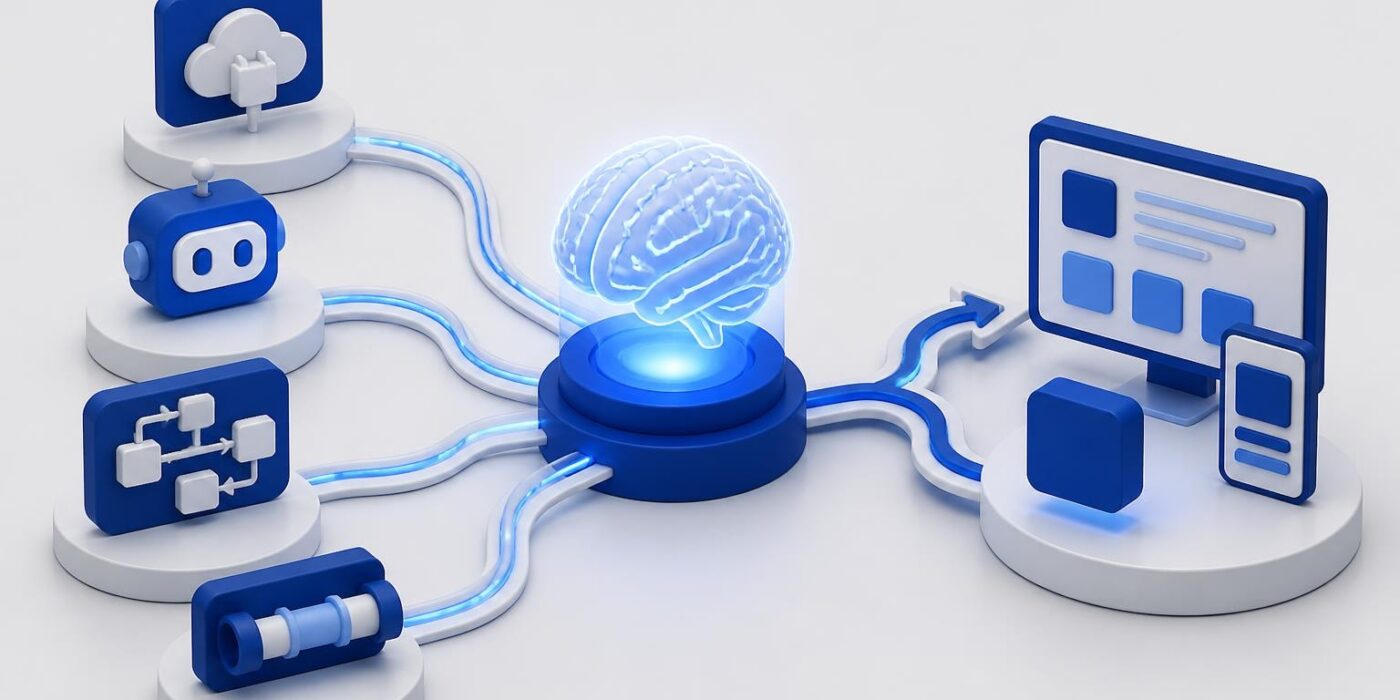
The landscape of artificial intelligence opportunities has evolved far beyond academic research and experimental prototypes. Developers now have practical pathways to build revenue-generating applications, automate complex workflows, and deliver features that were impossible just two years ago. This shift means real implementation opportunities for those who can integrate AI APIs, design intelligent systems, and ship production-ready code. The key is understanding where these opportunities exist, how to access them, and what technical skills unlock the highest-value projects.
Production AI Integration Creates Immediate Opportunities
Most artificial intelligence opportunities for developers in 2026 center around integration, not invention. You don't need to train foundation models from scratch. Instead, the value comes from connecting existing AI capabilities to real business problems through APIs, automation, and workflow design.
Building on Foundation Model APIs
OpenAI, Anthropic, Google, and other providers expose powerful language and vision models through straightforward REST APIs. This accessibility opens opportunities in:
- Customer support automation using conversational AI
- Content generation pipelines for marketing and documentation
- Data extraction and analysis from unstructured sources
- Code review and generation assistants integrated into development workflows
- Personalization engines that adapt to user behavior in real time
The technical barrier has shifted from model training to prompt engineering, API orchestration, and system design. Developers who master these skills can deliver features that previously required dedicated ML teams.
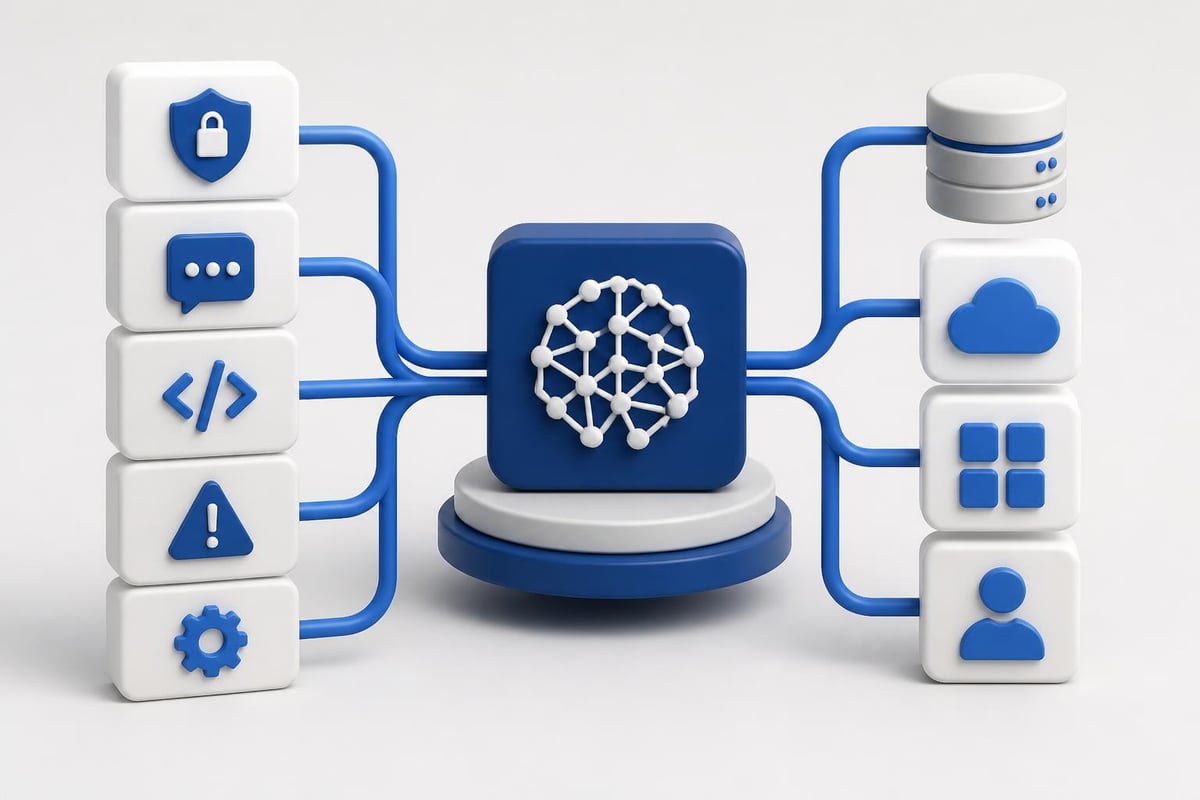
Autonomous Agents and Multi-Step Workflows
AI agents are emerging as one of the most significant artificial intelligence opportunities in 2026. These systems combine language models with planning, tool use, and memory to accomplish complex tasks autonomously.
Practical agent applications include:
- Research assistants that gather information across multiple sources
- Deployment automation that handles testing, rollback, and monitoring
- Customer onboarding flows that adapt based on user responses
- Data pipeline orchestration that adjusts to changing schemas
- Quality assurance bots that find edge cases in applications
Building agents requires understanding state management, tool selection logic, and how to handle failures gracefully. The opportunity lies in creating reliable agents for specific domains rather than general-purpose systems.
| Agent Component | Implementation Approach | Common Pitfall |
|---|---|---|
| Planning | ReAct pattern with step tracking | Over-planning without execution |
| Tool Use | Function calling via API | Insufficient error handling |
| Memory | Vector database + conversation history | Context window management |
| Evaluation | Task completion metrics | Ignoring partial success cases |
Developer-Focused Career Paths in AI
The demand for developers who can ship AI features continues to outpace supply. Understanding where these artificial intelligence opportunities exist helps you position your skills effectively and choose projects that build relevant experience.
Specialized Roles Emerging in 2026
Traditional software engineering roles are splitting into AI-specific positions. Companies need developers who understand both software architecture and AI system design.
AI Integration Engineer roles focus on connecting foundation models to existing systems. You build APIs that wrap AI capabilities, handle rate limiting, implement caching strategies, and ensure reliable error handling. This position requires strong backend development skills plus understanding of prompt engineering and model behavior.
Prompt Engineering Specialist positions have matured beyond writing clever prompts. These roles involve designing prompt libraries, building evaluation frameworks, optimizing token usage, and creating prompt versioning systems. You need programming skills to automate prompt testing and integrate prompts into production code.
AI Workflow Architect roles design end-to-end systems that combine multiple AI capabilities. You decide when to use RAG versus fine-tuning, how to chain models together, and where to add human-in-the-loop checkpoints. Success requires both technical depth and understanding of business requirements.
For developers exploring AI for programming, these roles offer clear career advancement paths with competitive compensation. The key differentiator is shipping production systems rather than just running tutorials.

Job Markets and Compensation Trends
Multiple specialized job boards now track artificial intelligence opportunities exclusively. Platforms like AI Career Hub aggregate over 1,200 positions specifically in AI, machine learning, and data science. Inference Jobs curates roles at leading AI companies, while AI Jobs connects developers with opportunities across the full spectrum of AI engineering.
Compensation for AI-focused developers has increased significantly. Mid-level engineers with demonstrated AI integration experience command 20-30% higher salaries than traditional backend roles. Senior positions involving system design and production deployment often exceed $200k in major tech hubs.
The most valuable experience comes from shipping real applications. Employers prioritize candidates who have:
- Deployed AI features to production with real users
- Optimized API costs and latency at scale
- Designed evaluation frameworks for AI outputs
- Handled edge cases and model failures gracefully
- Integrated AI with existing authentication, databases, and services
Building a portfolio of artificial intelligence projects demonstrates these capabilities more effectively than certificates or coursework alone.
Building Revenue-Generating AI Applications
The most significant artificial intelligence opportunities for independent developers involve creating products that solve specific problems better than existing solutions. The barrier to entry has never been lower, but sustainable businesses require more than wrapping an API.
Vertical-Specific Solutions
Generic AI tools face intense competition. Specialized applications for specific industries or use cases offer better opportunities. Consider building:
Legal document analysis tools that extract clauses, identify risks, and compare contracts. Law firms pay substantial fees for accurate, reliable automation that handles their specific document types.
Medical coding assistants that help healthcare providers assign billing codes based on clinical notes. Accuracy and HIPAA compliance create moats that protect against competition.
Technical documentation generators for software teams that maintain API documentation, changelog entries, and internal wiki content based on code changes.
Financial report analyzers that extract metrics from earnings calls, SEC filings, and analyst reports for investment research.
Each vertical has domain-specific requirements that generalist tools can't address. Your opportunity lies in understanding one domain deeply and building purpose-built solutions.
SaaS Products with AI Features
Adding AI capabilities to traditional SaaS applications creates competitive advantages and justifies premium pricing. Focus on features where AI delivers measurable value:
- Smart search that understands intent and returns better results than keyword matching
- Automated categorization that tags, organizes, and routes information without manual rules
- Predictive analytics that forecast trends based on historical patterns
- Intelligent recommendations that suggest actions, content, or connections
- Natural language interfaces that let users interact with complex systems conversationally
The implementation strategy matters as much as the feature itself. Design systems that degrade gracefully when AI components fail, provide escape hatches for user corrections, and track accuracy metrics rigorously.
| AI Feature Type | Implementation Complexity | Revenue Impact | User Adoption Risk |
|---|---|---|---|
| Semantic Search | Medium | Moderate | Low |
| Content Generation | Low | High | Medium |
| Predictive Analytics | High | High | Medium |
| Recommendation Engine | Medium | Moderate | Low |
| Conversational Interface | High | Low | High |
For developers working on artificial intelligence-based projects, validating market demand before building complex features prevents wasted effort on capabilities users don't value.
Technical Skills That Unlock AI Opportunities
Access to artificial intelligence opportunities requires specific technical capabilities beyond general programming knowledge. Prioritize skills that directly enable shipping production AI features.
API Integration and Orchestration
Every AI application starts with connecting to external services. Master these fundamentals:
Authentication and key management using environment variables, secret management services, and rotation policies. Exposed API keys represent the most common security vulnerability in AI applications.
Rate limiting and backoff strategies that handle quota limits gracefully. Implement exponential backoff, request queuing, and fallback options when primary services are unavailable.
Response parsing and validation that handles unexpected output formats. AI APIs occasionally return malformed responses, empty results, or error messages that don't match documentation.
Cost tracking and optimization by monitoring token usage, caching repeated requests, and choosing appropriate models for each task. Production costs often exceed expectations by 10x without careful instrumentation.
Strong API integration skills apply across all artificial intelligence opportunities, from simple chatbots to complex agent systems.
Prompt Engineering and Evaluation
Effective prompting is software engineering, not creative writing. Treat prompts as versioned code with tests and performance metrics.
Build prompt libraries that standardize how your application communicates with models. Version prompts alongside application code and test changes before deployment.
Implement evaluation frameworks that measure output quality automatically. Use model-graded evaluations, keyword matching, or structured output validation depending on your use case.
Track performance metrics including accuracy, latency, cost per request, and user corrections. Identify which prompts perform well and which need improvement.
Design few-shot examples that guide model behavior without lengthy instructions. Well-chosen examples often outperform verbose explanations.
These techniques separate developers who ship reliable AI features from those whose applications break when model behavior shifts.
Production Deployment and Monitoring
AI applications require different operational considerations than traditional software. Build expertise in:
- Error handling for model failures, timeouts, and unexpected outputs
- Logging and observability to debug issues in non-deterministic systems
- A/B testing frameworks for comparing different prompts or models
- User feedback collection to identify cases where AI output misses the mark
- Graceful degradation when AI components are unavailable
NVIDIA CEO Jensen Huang has noted that AI will create new opportunities in robotics, biotechnology, and design as developers learn to integrate these capabilities effectively. The developers who thrive will be those who treat AI as infrastructure that requires the same operational rigor as databases and caching layers.

For developers looking to build production-ready skills systematically, the AI Developer Certification program focuses on practical integration, deployment, and scaling rather than theoretical knowledge. The curriculum covers prompt engineering, backend workflows, and automation through hands-on projects that mirror real production requirements.
Emerging Opportunities in Specialized Domains
Certain domains present outsized artificial intelligence opportunities due to technical complexity, regulatory requirements, or market timing. Understanding where these opportunities exist helps you choose high-value projects.
Explainable AI and Compliance
As AI systems make consequential decisions, explainability becomes a requirement rather than a feature. Research in explainable artificial intelligence shows growing demand for interpretable models and decision audit trails.
Opportunities exist in:
- Building audit logging systems that track which inputs led to which AI decisions
- Creating explanation generation tools that translate model outputs into human-readable justifications
- Developing compliance frameworks for regulated industries like finance and healthcare
- Designing human review interfaces where experts can verify AI recommendations before execution
These capabilities are essential for enterprise adoption but often overlooked by developers focused purely on accuracy metrics. Companies pay premium rates for solutions that satisfy compliance requirements while maintaining performance.
AI-Powered Development Tools
Developers represent a uniquely valuable market for AI applications. They understand the technology, tolerate rough edges, and make purchasing decisions independently. Focus on tools that improve developer productivity:
Code review automation that identifies security vulnerabilities, performance issues, and style violations beyond what traditional linters catch.
Documentation generators that maintain README files, API docs, and code comments based on implementation changes.
Test case generators that create edge cases and integration tests automatically from function signatures and existing code.
Debugging assistants that analyze error messages, stack traces, and system logs to suggest fixes.
The key is solving specific, painful problems rather than building general-purpose coding assistants. Developers choose specialized tools over all-in-one solutions when the specialized tool works better for their particular workflow.
AIoT and Edge Deployment
Integrating AI with IoT devices creates opportunities in industrial automation, smart cities, and consumer electronics. Unlike cloud-based AI, edge deployment requires:
- Model optimization to run on resource-constrained hardware
- Offline operation when network connectivity is unreliable
- Real-time inference with latency requirements under 100ms
- Power efficiency for battery-powered devices
- Over-the-air updates to improve models without hardware changes
These constraints make edge AI projects more challenging but also create defensible competitive positions. Companies need developers who understand both embedded systems and machine learning, a rare combination that commands premium compensation.
Continuous Learning and Skill Development
Artificial intelligence opportunities evolve rapidly as new models, APIs, and techniques emerge. Developers who stay current maintain advantages over those who rely on year-old knowledge.
Practical Learning Approaches
Academic courses and theoretical knowledge have limited value compared to shipping real projects. Focus on hands-on learning:
Build small projects weekly that test specific capabilities. Spend 4-6 hours implementing a focused feature rather than months on a comprehensive application.
Read API documentation directly rather than relying on tutorials. Official docs reveal capabilities and limitations that blog posts miss.
Study production codebases from open-source AI applications. Understanding how others structure projects, handle errors, and manage costs provides templates for your own work.
Join developer communities where people share implementation challenges. Discord servers, Slack groups, and Reddit communities offer faster answers than documentation searches.
Track your API costs for every experiment. Understanding the economics of AI applications prevents expensive surprises when scaling.
For developers seeking structured guidance on building artificial intelligence projects, combining systematic tutorials with independent experimentation accelerates skill development faster than either approach alone.
Staying Current with Model Capabilities
New models and API features launch every few weeks. Develop systems for tracking changes:
- Subscribe to official changelog announcements from OpenAI, Anthropic, Google, and other providers
- Test new models on your existing use cases to identify performance improvements
- Participate in beta programs that provide early access to upcoming features
- Follow AI researchers on Twitter/X who share preprints before official releases
- Experiment with open-source models via Hugging Face or Replicate
The goal isn't chasing every new release but understanding which changes unlock new opportunities or improve existing applications. Research on ChatGPT’s applications and opportunities demonstrates how quickly new capabilities enable entirely new use cases.
Market Timing and Strategic Positioning
Understanding where artificial intelligence opportunities currently exist versus where they're heading helps you invest effort strategically. Not all opportunities offer equal returns.
Crowded Versus Open Markets
Some AI application categories face intense competition while others remain wide open. Assess markets before committing months to development.
Highly competitive markets include general-purpose chatbots, writing assistants, and image generators. These categories have well-funded startups, big tech offerings, and low switching costs for users.
Underserved markets include domain-specific tools for industries like construction, agriculture, and local government. These sectors have budget for software but receive little attention from AI developers.
Emerging opportunities exist in AI agents, multi-modal applications, and real-time collaborative systems. These categories require more technical sophistication but offer first-mover advantages.
Choose markets based on your competitive advantages. If you have domain expertise in manufacturing, build for manufacturers. If you excel at system design, tackle complex agent workflows. Avoid competing on pure AI capabilities where you're up against companies with larger models and more resources.
Building Versus Wrapping
The decision between building custom solutions and wrapping existing APIs determines your defensibility and margins. Consider this framework:
Wrap APIs when:
- Speed to market matters more than differentiation
- Your value comes from domain expertise rather than technical capabilities
- Users need simplified interfaces to complex tools
- You're validating demand before deep investment
Build custom solutions when:
- You need capabilities existing models don't provide
- Data privacy or compliance prohibits external APIs
- Latency or cost requirements make API calls impractical
- You have unique data that enables superior performance
Most successful AI applications combine both approaches. Use APIs for general capabilities while building custom components for differentiated features. This hybrid strategy balances development speed with competitive positioning.
Artificial intelligence opportunities in 2026 reward developers who ship production applications rather than those who simply understand the technology. The highest-value skills involve API integration, prompt engineering, system design, and operational excellence. Whether you're building career skills, launching products, or improving existing applications, focus on practical implementation and measurable outcomes. AI Code Central provides the coding tutorials, APIs, and real-world projects you need to build production-ready AI applications, integrate modern tools into your workflow, and stay competitive as the technology evolves.